In 2026, Australia’s property market will have split into two speeds. On one side, the property market in some cities or suburbs is increasing; on the other side, it is barely growing. This variation in investment is important to understand if you want to buy, sell, or rent property in Australia.
You need to understand the areas where you can find future opportunities, as the country’s property market is facing a two-speed trend over the last few years. In this article, we will guide you on which factors are affecting the speed and which areas are best for investments. Keep reading!
What Is a Two-Speed Property Market
A two-speed property market reflects a situation where property rates for similar homes vary at different locations at the same time. It means there is not a uniform national trend, but actually two property markets are running side by side.
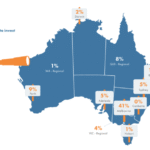
For instance, in Perth, Brisbane and Adelaide, property prices have risen by 22.6%, 13.0% and 15.0% respectively in the last few months. During the same time, the house prices in cities like Melbourne, Hobart and Darwin have declined by 1.9%, 1.2% and 0.1% respectively. So, this is called a two-speed property market, which is trending in Australia.
Why Is Australia Experiencing a Two-Speed Market
Here are some factors that are causing a two-speed property market in Australia in 2026:
Population growth
Due to infrastructure, job opportunities, and other facilities, there is strong population growth in major cities of Australia, such as Perth, Adelaide, Melbourne, Sydney, and Brisbane. Now, more and more people are moving to the cities for studies, work, or lifestyle. Due to this, the demand for homes increases in such areas.
Both owner-occupiers and investors are looking to buy property in major cities, which results in higher home prices in these locations. On the other hand, suburbs have comparatively less population, and the house prices in those areas are lower than those in the metropolitan cities of Australia.
Borrowing capacity & interest rates
Another factor that affects the two-speed property market in Australia is loan volumes. Borrowing capacity gets approved more quickly than the housing supply. Therefore, when borrowing demand increases faster than supply, the result is higher prices for properties.
Moreover, due to the government’s 5% deposit scheme for first homebuyers, the cheaper homes are increasing in value at a much faster rate than expensive houses. Also, the Domain data shows that the rents also increased in Australia’s capital cities, with house rents at $680 and unit rents at $675.
Imbalance between supply and demand
One of the most significant reasons behind the two-speed market is the uneven balance between housing supply and demand. In areas where population growth is high, but housing construction is low, the property prices are rising rapidly.
On the other hand, markets with more housing supply have lower property prices as competition is less in those areas.
What This Means for Investors
If you want to invest at home for investment purposes, then look for locations with genuine growth opportunities. There are many areas in and around Melbourne that are best for investment due to developed infrastructure, connectivity, lifestyle, and other useful amenities.
Consider suburbs just outside the premium ring where affordability meets potential. Avoid buying on a price basis, but look for locations that give you heavy returns in the long run. Choose locations where rent and property prices will increase in future.
Closing Words
Australia’s two-speed property market will likely persist through 2026 and beyond. The gap between premium and entry-level segments shows no signs of closing quickly. So, you need to invest smartly at the right location. If you need any help in finding the right location, then Property Buyers Australia is here to help. We have property experts who can guide you from start to finish. Reach us now!