These days, property developers in Melbourne are facing a unique challenge. Investors want to see what they are investing in before committing their money. In other words, they want to see what the residential or commercial property will look like once it’s constructed.
This means investors seek certainty and confidence when investing in a property. So, successful property developers in Melbourne aren’t just selling apartments or office spaces, they are selling certainty.
This is where high-fidelity 3D visualization comes into play.
What is 3D Rendering and Why Does it Matter?
Pre-selling a property before construction begins is critical for most Melbourne developments, as it helps fund the build and reduces financial risk. However, selling something that does not yet exist presents a challenge: Off-the-plan consumers struggle to connect emotionally with a layout. This is particularly true for residential investors or home buyers who want to know what the property will look like.
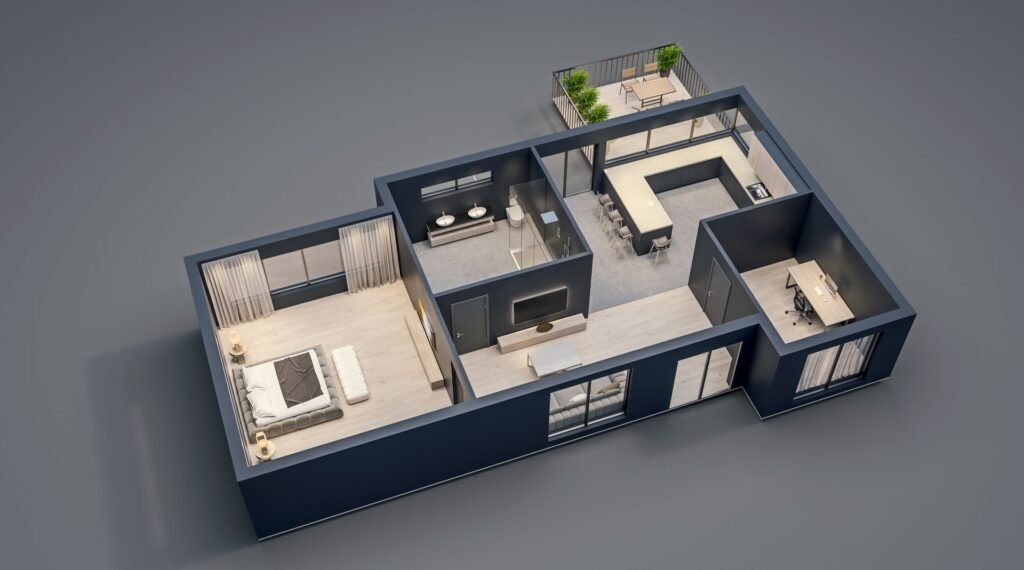
Floor plans, CAD drawings, and idea sketches can only go so far. That’s why 3D rendering has emerged as an excellent tool for bridging the gap. 3D visualisation includes interactive walkthroughs, immersive VR, and accurate floor-plan modelling of the property. It entirely replaces guesswork with a near-tangible experience. Potential investors or buyers can walk through spaces, explore various amenities, and explore spatial relationships long before the first stone is laid. This sparks buyer emotion and investor confidence in the property.
In cities like Melbourne, 3D rendering of properties is already widespread among developers. It’s no longer a design tool but an essential sales asset that drives engagement, expands buyer reach, and shortens sales cycles.
How Melbourne Developers Use 3D Rendering
Realistic walkthroughs: 3D renderings are not simply attractive images. Developers employ true-to-scale 3D flats, allowing customers to change finishes, open sliding doors, and check sightlines to streets and parks. This reduces “what-if” questions at the contract stage.
Interactive plan configurations: Buyers can explore furniture configurations and experience the feel of a 60 m² one-bedroom with a sofa, dining area, and home office.
Virtual sales suites and VR appointments: For international or interstate purchasers who are unable to visit an on-site display suite, a hosted VR walk-through simulates an open-for-inspection experience and keeps talks moving forward.
Data-driven marketing: Real estate marketing is integrating 3D assets with CRM and analytics to determine which units, views, or finishes convert the most. Marketing spending becomes more targeted, rather than random.
For buyers, early transparency helps make smarter decisions and fewer unwanted surprises at handover. For investors, projects that presell faster and with greater conviction reduce financial risk and make completion timelines more certain.
Looking Forward to 3D in Real Estate
The influence of 3D rendering or visualization on sales performance has been significant. Developers who use high-quality 3D visualization have regularly reported higher off-plan sales rates than those who use traditional methods. Buyers feel more confident in their purchasing decisions when they can clearly see what they’re purchasing. This trust drives shorter sales cycles and higher conversions.
International buyers profit the most from this technology. Someone residing in Singapore or Shanghai can take a virtual tour of a Melbourne residence without having to travel there. They can inspect finishes, evaluate sight lines, and comprehend the arrangement as thoroughly as someone visiting a physical display space. This has opened markets that were previously difficult to access.
So, the future of 3D in real estate is bright. We can even see major advancements in 3D in the real estate industry. So, it’s important to stay up to date and follow best practices to keep up with the market.
Also read Why Invest in Melbourne.